Compare liquid filter bag Size #1 and Size #2, including housing compatibility, flow and dirt holding considerations, and what to confirm before requesting a quote.
Need help matching a liquid filter bag?Send material, micron rating, bag size, ring type, quantity, and application details for RFQ review.
Size #1Shorter bag body for compatible compact housings.
Size #2Longer bag body with more media area in compatible housings.
Technical illustration for comparison. Actual dimensions, ring type, and construction may vary by housing and application.
Short Intro
Liquid filter bag size matters because the bag must fit the filter housing, support basket, and sealing area. Size #1 and size #2 are two common industrial filter bag size categories, but the size label alone is not enough for every application.
Before requesting a quote, buyers should confirm actual bag dimensions, ring type, housing compatibility, material, micron rating, and quantity.
For RFQ support, Go2Filter can review liquid filter bag specifications:
Size #1 and size #2 are commonly used names for liquid filter bag dimensions. They help buyers, maintenance teams, and suppliers identify the general size category of a bag used in a compatible housing.
However, size labels can vary by housing design, ring type, and manufacturer. Always confirm the actual diameter, length, and sealing style before finalizing a quote.
Typical Size #1 Filter Bag
A size #1 liquid filter bag is often used in smaller bag filter housings or lower-flow applications.
Typical characteristics may include:
Smaller bag volume than size #2
Shorter length than size #2
Common use in compact housings
Easier handling in smaller systems
Suitable where flow and solids loading are moderate
The exact dimensions should be confirmed from the existing bag, housing documentation, or supplier specification.
Typical Size #2 Filter Bag
A size #2 liquid filter bag is often used in larger single-bag housings and is one of the most common industrial bag sizes.
Typical characteristics may include:
Larger bag volume than size #1
Longer length than size #1
Higher solids-holding capacity than a smaller bag
Common use in industrial liquid filtration systems
Potentially longer service life where solids loading is higher, depending on process conditions
As with any filter bag, the actual fit must be confirmed before quotation.
Size #1 vs Size #2 Comparison
Factor
Size #1
Size #2
General size
Smaller
Larger
Typical use
Compact housings, lower volume systems
Common industrial housings, higher volume systems
Solids capacity
Lower than size #2
Higher than size #1
Handling
Easier for small systems
Larger bag volume and more media area
Fit requirement
Must match housing and basket
Must match housing and basket
Quote requirement
Confirm dimensions and ring type
Confirm dimensions and ring type
This comparison is general. It should not replace actual measurement or housing confirmation.
Housing Compatibility
Filter bag size must match the housing basket and top seal. A bag that is too long, too short, too wide, or fitted with the wrong ring type may not seal properly.
When checking compatibility, confirm:
Housing model or brand if available
Basket diameter and length
Bag diameter and length
Ring or collar type
Lid closure and sealing area
Existing sample photos
If the housing nameplate is available, include a photo when requesting a quote.
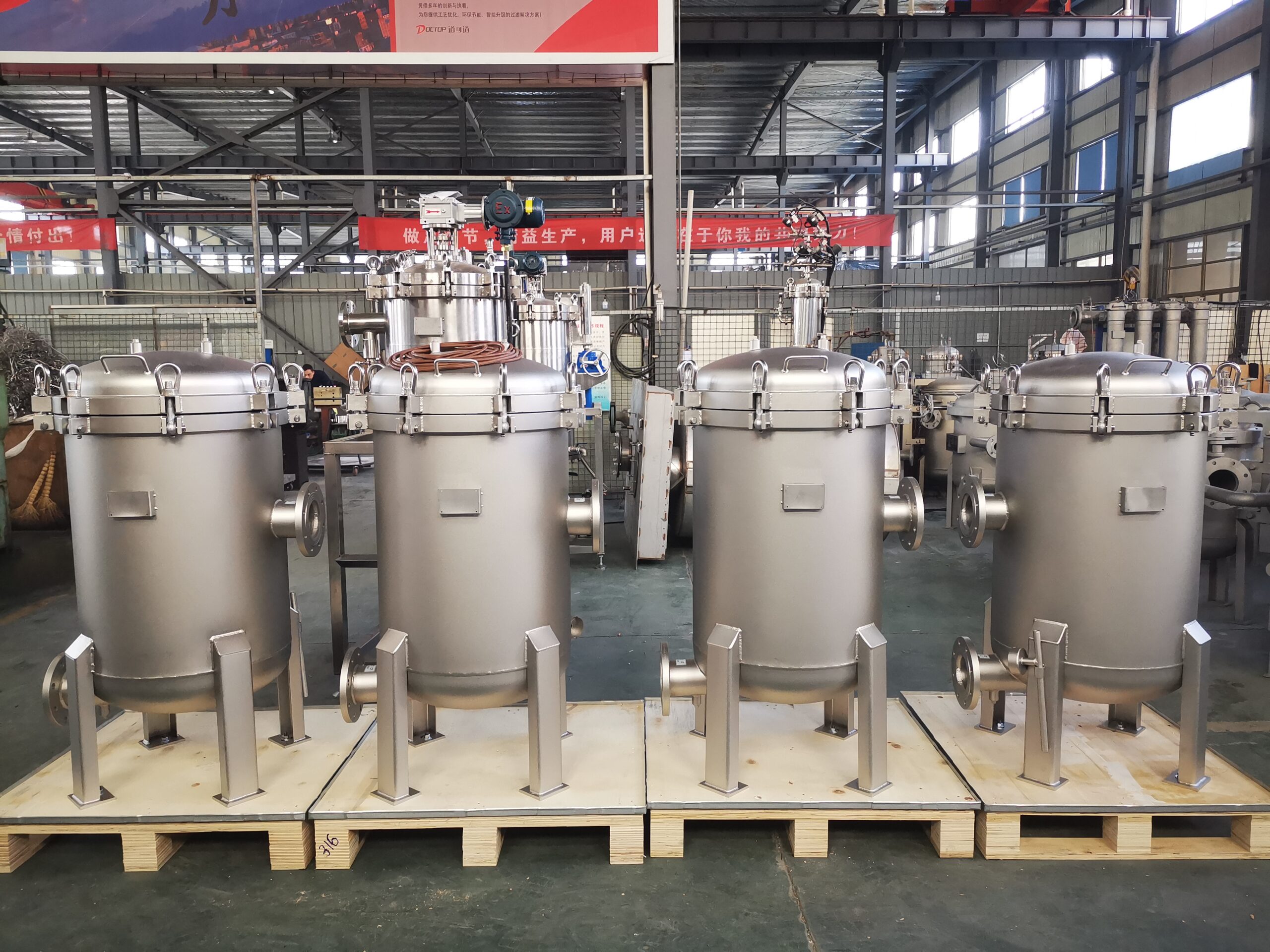
Housing context image for filter bag size compatibility. Confirm actual bag dimensions and housing basket specifications before quotation.
Flow Capacity Considerations
Size #2 bags are often selected when a system needs more media area or solids capacity than a smaller bag can provide. However, flow capacity depends on more than bag size.
Important factors include:
Liquid viscosity
Solids loading
Micron rating
Bag material
Housing design
Pump conditions
Allowable pressure drop
A larger bag may help in some applications, but it does not automatically solve every flow or plugging issue.
When to Use Size #1
Size #1 may be considered when:
The housing is designed for size #1 bags
The system has moderate flow demand
Space is limited
Solids loading is not excessive
Smaller batch processing is involved
The housing design is the first requirement. Do not switch to size #1 unless the housing is compatible.
When to Use Size #2
Size #2 may be considered when:
The housing is designed for size #2 bags
The system handles larger liquid volume
More solids-holding capacity is needed
Changeout frequency needs review
A common industrial bag size is preferred
Again, fit and sealing must be confirmed before use.
What Customers Should Confirm Before Requesting a Quote
No. Size #2 is larger, but the correct choice depends on the housing design, flow rate, solids loading, and application. The bag must fit the housing.
Can I use a size #1 bag in a size #2 housing?
Usually no. Filter bags should match the housing and basket design. Using the wrong size can cause poor sealing, bypass, or mechanical problems.
Are size labels enough for a quote?
Size labels help, but dimensions and ring type are better. Photos of the existing bag and housing can reduce the risk of mismatch.
Does a larger bag always reduce pressure drop?
Not always. Pressure drop depends on liquid viscosity, solids loading, material, micron rating, flow rate, and housing design. Larger media area may help in some cases, but it is not a universal solution.
What if I only have an old filter bag sample?
Send photos and measurements of the sample, including the top ring, diameter, length, label, and seam style if visible.
Request a Quote on Go2Filter
For pricing, availability, shipping, and lead time, send your size, material, micron rating, quantity, and application details for review.